LangOps and Intelligent Language Studies by the Class of 2026
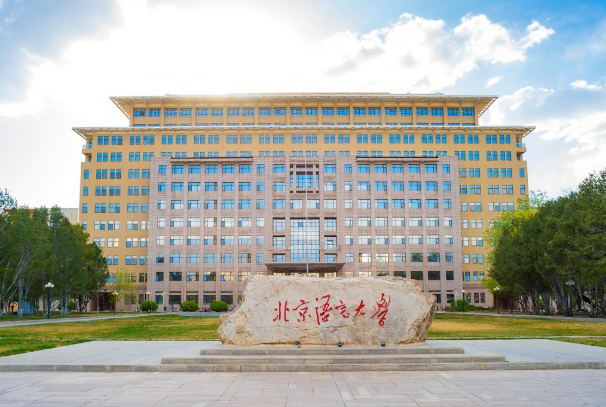
Every June, the thesis defenses tell me more about where our field is heading than any conference keynote does. This year’s cohort in BLCU’s AI Translation program just defended, and as I sat through presentation after presentation, one thing became impossible to ignore: not a single student turned in “a translation.” Every one of them built a system.
This blog post was written with the assistance of AI (Claude Opus 4.8).
For the past few years, my colleague Han Lintao (韩林涛) and I have been arguing that translation education has to move from delivering a product to developing intelligent language systems. We follow the LangOps paradigm, and we call the academic discipline underneath it Intelligent Language Studies. The four principles are simple to say and hard to live up to: be human-centered (value human contribution), be tech-supported (try AI first), be knowledge-enabled (embrace data-centric AI), and be scenario-driven (support every customer-facing function). This year’s theses are the best evidence I have that the principles are taking root.
Let me walk you through what these students actually built. I’m keeping everyone anonymous here.
Going global: localization as a system, not a deliverable
A striking share of the cohort pointed their tools at the same problem Chinese companies are wrestling with right now: how do you take a brand, a product, or a piece of content abroad without drowning in manual work?
One student built an LLM agent-driven localization system for going-global brand content, aimed squarely at social media, where tone and cultural fit matter more than literal accuracy. Another tackled the unglamorous but essential side of the same coin: an AI-based language quality assurance system for globalized products that takes a UI screenshot or a string, runs it through a multimodal model (GPT-4o) with term bases, style guides, and industry rules injected into the prompt, and flags both linguistic and engineering defects, things like right-to-left layout breakage and text truncation, in a structured report. That is LQA reimagined for small teams that can’t afford a localization department.
The games industry showed up strongly too. One project is a case library and simulation training platform for game localization QA, with 100 annotated real-world cases mined from Steam reviews and patch notes, plus a browser-based trainer that uses bounding-box selection and IoU scoring to teach students how to spot and classify defects. Another built Ocar Tool, a Ren’Py game localization tool driven by multimodal LLMs and OCR that unpacks a visual-novel game, translates it against a terminology database, repacks it, and even offers a floating window that OCRs on-screen text live and overlays the translation. A third designed a Notion-based knowledge-base content distribution agent for game localization teams, turning a knowledge base into something that actively pushes the right information to the right people.
What I love about this cluster is that every one of them is scenario-driven. Nobody started with “I want to use an LLM.” They started with a real workflow that hurt, and then built the system that made it hurt less.
Telling China’s story: cultural communication, engineered
The second big theme was international cultural communication, and this is where the knowledge-enabled principle really shines. You cannot let a general-purpose model freestyle about cultural heritage; it will hallucinate, mistranslate terminology, and flatten context. These students knew it, and they built guardrails.
One project is a translation and cultural interpretation platform for the Mawangdui T-shaped silk painting, which pairs an authoritative bilingual knowledge base with retrieval-augmented generation so that every explanation is constrained by actual archaeological scholarship, then adds a “cross-cultural comparison” layer relating Han-dynasty cosmology to Greek and Roman views to lower the barrier for foreign audiences. Another built an intelligent Yue opera cultural communication platform with an 1,800-term bilingual glossary and a Q&A agent named “Xiao Jiu” to make a regional opera tradition approachable in English.
The same instinct runs through a multilingual platform for Han-dynasty state and ethnic names, a lightweight retrieval system grounded in the Records of the Grand Historian and other official histories, with fuzzy search via edit distance and sub-second response; an intelligent cultural dissemination platform for southern Chinese provinces; a knowledge-constrained agent pipeline powering a localization CMS for ancient-architecture science videos; and a teaching support system for cross-contextual adaptation of Chinese internet slang that uses jieba, TF-IDF, and DeepSeek to explain not just what a meme means, but the pragmatic stance behind it, whether a phrase is affectionate or sarcastic, which is exactly where literal translation fails.
These are digital-humanities projects with engineering discipline. The knowledge base comes first; the model is constrained to it. That is data-centric AI in practice.
Knowledge, terminology, and the plumbing of global communication
A few students went after the infrastructure layer, the unglamorous systems that make everything else possible, and these were some of my favorites because they show real operational maturity.
One built an LLM-powered agent for dynamic terminology lifecycle management, nicknamed “L10N Guard,” that moves terminology work out of the TMS back office and into Feishu, where people actually talk. It uses a perceive-decide-execute-feedback architecture, Pydantic type validation, confidence gating, and a Crowdin integration, and it even includes an “undo” mechanism to lower the psychological barrier to automation. That last detail is human-centered design at its best: the engineer understood that people won’t trust automation they can’t reverse.
Others built a multilingual platform for US-Iran weaponry news combining LLM translation with RAG-based authenticity verification for a high-stakes vertical where misinformation spreads fast; a multilingual Chinese pet-knowledge aggregation and Q&A platform; and an AI-driven information aggregation and automatic release system for university clubs that uses n8n workflows, OCR, and an AI agent to turn scattered WeChat posts into a clean, structured mini-program feed. Different domains, same pattern: aggregate messy multilingual data, structure it, make it useful at scale.
Why this matters
Here is what I keep coming back to. Every student in this cohort entered the program as a translation major. They took Python from their first semester. By graduation they were building content management systems, integrating models through APIs, designing RAG pipelines, managing databases, evaluating AI output, and shipping working software. None of them sees AI as a threat to their craft, because they have learned to sit on top of it as engineers and language experts at the same time.
We are not training people to compete with machines at translation. We are training them to build the intelligent multilingual systems that the global economy now runs on. The principles of Intelligent Language Studies: human-centered, tech-supported, knowledge-enabled, scenario-driven, are the core of that effort.